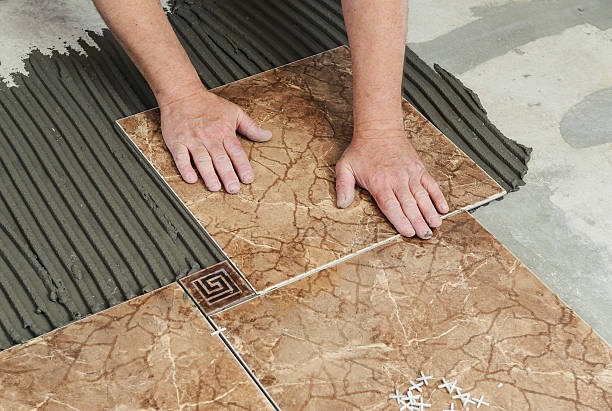
Large-format and slab tiles are increasing in recognition among contractors due to their ability to provide seamless designs. But, these tiles come with their own set of challenges to be overcome during the installation process to ensure a satisfying end result.
Properly drying these large tiles prior to fixing down will help you determine the design that best suits your project. This is particularly important when you are installing a long plank-shaped floor tile that mimic linen wood.
Installation
The time spent preparing the floor or wall for the installation of tiles is essential to create a beautiful, smooth final. It is crucial to prepare the area in the case of large-format tiles and slabs. These can be extremely heavy. From mixing the mortar up to the final wiggle, every step counts.
The sheer size of these tiles creates a visual symmetry that adds a sense of elegance to any room. They also requireless pieces for installation and an easier and more efficient process.
For a proper installation of large-format tiles, it is necessary to apply a substantial layer of adhesive on the substrate. It is recommended that you apply a high-performance mix of adhesive, which is resistant to sagging. This can also help with lippage. You can buy this type of mortar at the nearest supply store.
Once the floor is prepped for tiling then it’s time to design your layout. With a little care, you will transform a huge tile stack into a seamless floor wall. The best way to begin is by creating the layout line. It’s possible to do this using an extension laser that can be used to extend vertical and horizontal lines out from the center. Before putting the tiles in place it is a good idea to “back butter” the tiles.
Cutting
They form a continuous attractive, visually appealing surface. This can reduce the need for renovations and encourages a more sustainable way of life. They also allow for the use of less grout lines, which creates an impressive focal point as well as an elegant style that matches the style of your home.
It is essential to prepare the substrate properly to stop or limit the risk of cracking and lippage. Therefore, it is recommended to grind up high areas and patch low ones prior to installing. It is essential to perform a dry lay as well, to make sure your layout plans are accurate.
If your surface is flat and gach gia co stable, you’re now ready to begin the cutting process. It’s crucial to follow the manufacturer’s instructions with a careful eye when working with a tile cutter. Make your cuts in advance and lay out the tiles before you start, especially in the case of slabs of tiles that are hard to get rid of when laid. Even a small mistake can have a major impact to the look of your final work. Also, you’ll save money by reducing the amount of waste.
Layout Design
If you’re in search of a tile that is not just durable but also fashionable, then a porcelain slab is the ideal choice. The large tiles are available in a wide range of textures and patterns ranging from classic to contemporary, which are suitable for every kind of design. Their larger sizes also mean that they have less grout lines, making them more easy to clean.
Layout planning is a method of organizing production equipment and supplies in accordance with the requirements of the customer and local regulations. It involves determining the amount of space is required for storage and ensuring that each center has enough capacity.
Three people are needed for the removal of a slab measuring one meters by one meter. Two workers must handle the slab, while the third person acts as the spotter to ensure that the slab doesn’t trip over itself. In this video, MAPEI sales representative Chad Loveless is the spotter while tile setters work on a simulated layout to prepare the slab to cut.
Lippage Control
Two elements are crucial for a beautiful tile installation A flat, even surface and an efficient design. If you get both of these things right, the installation will be smooth. If you don’t, you’ll be fighting a losing fight against broken tiles, and a dull appearance.
To reduce the likelihood of a lippage issue Installers should adhere to the recommendations of the manufacturer and ANSI guidelines for substrate flatness. In addition, they should choose mortars that are specifically designed for heavy and massive floor tile to ensure proper support and adherence. A grout that is not designed for the right type could compromise the strength and durability of the installation. This could result in shrinkage or lippage.
The joint spacer is required to keep the gap of 3mm between the slabs. This will allow the installer to quickly identify and deal with any changes that occur when laying the slab, which will ensure an even surface all through the installation.
Handling
It is crucial to begin mixing the thin-set long before mixing the first bag. The process of preparing is crucial to a smooth and perfectly placed substrate and a clever, well-planned layout. Make sure you’re doing these correctly and you’ll be able to enjoy the spacious, monolithic flooring you’ve always wanted. If you do it wrong, you may end up with lippage, cracked tiles, or a mess.
Proper surface prep is the most crucial aspect of any tile installation, and it’s especially crucial for large slabs. These rigid materials magnify minor imperfections in substrates and lead to uneven surfaces as well as stress cracks. For a smooth, level surface requires meticulous cleaning, repair of the substrate, and making sure the surface is level.
The most difficult part when dealing with large-format slabs is making clean, precise cuts. It is essential to have a wet saw that is of top quality that is able to handle huge slabs without causing harm to them. If you can ensure that your cuts are exact, you’ll save time, money and frustration.